
Turquoise Earrings: A Complete Guide to This Timeless Stone
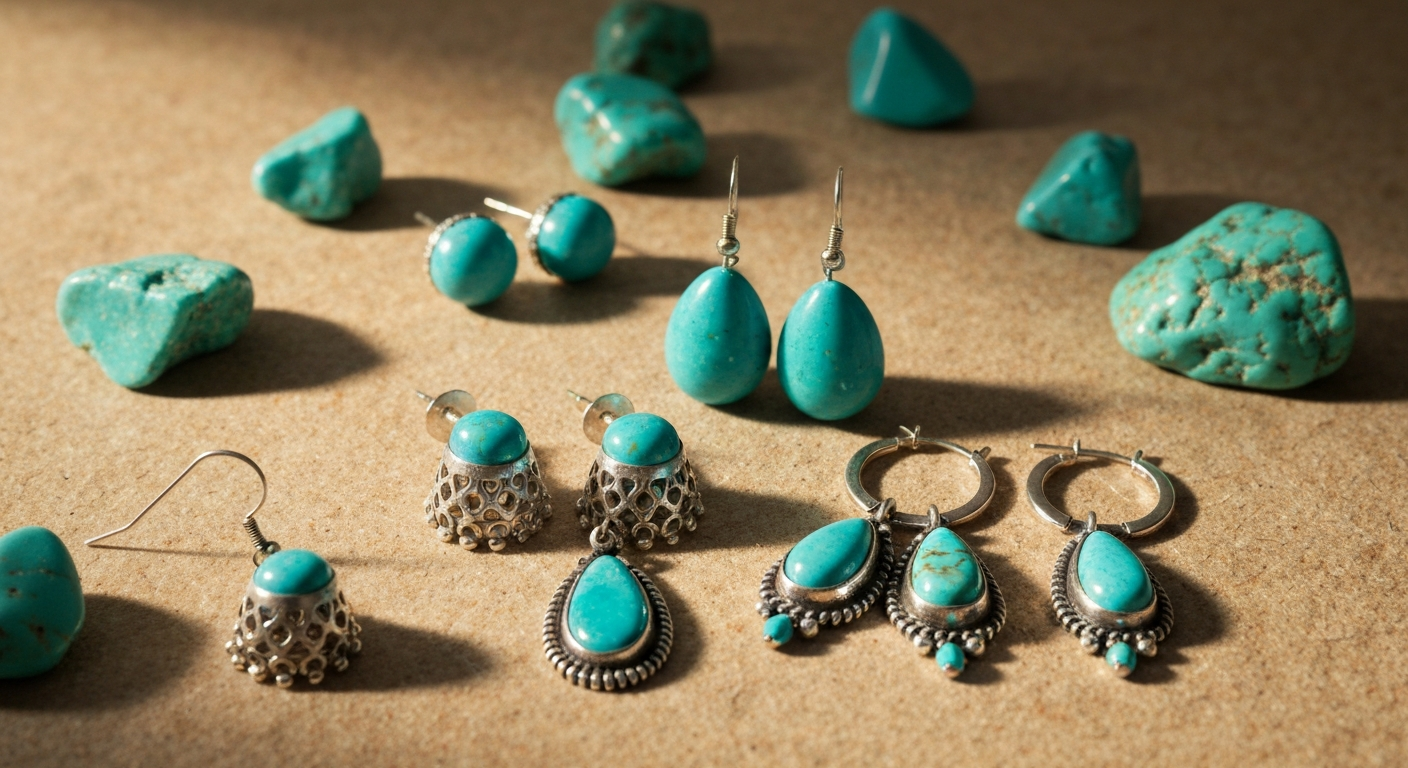
Turquoise is one of the oldest gemstones known to humanity. For over 5,000 years — from the royal tombs of ancient Egypt to the tribal jewellery of Rajasthan — this opaque blue-green stone has been prized as a talisman of protection, wisdom and good fortune. Its distinctive colour, ranging from sky blue to deep teal, is unlike any other stone in jewellery.
In India, turquoise earrings bridge the gap between traditional oxidised silver jewellery and contemporary boho aesthetics — one of the few styles that works across generations and dress codes. Whether set in a classic jhumka frame or dangling from a copper hook, turquoise color earrings add an unmistakable pop of colour that elevates any outfit.
At Zuzu's Trove, we carry 95 turquoise earring designs — from bold turquoise jhumka earrings to delicate studs and boho drops. This guide covers the stone's history, the best styles, how to spot real turquoise, and care tips to keep your pair vivid for years.
The History & Meaning of Turquoise
The word "turquoise" derives from the French pierre turquoise, meaning "Turkish stone," because the mineral first reached Europe through Turkish trade routes in the 13th century. But the stone itself is far older.
Ancient Egyptians mined turquoise in the Sinai Peninsula as early as 3,000 BCE — King Tutankhamun's death mask features turquoise inlays. Native American tribes considered it a sacred stone connecting earth to sky. Tibetan cultures have used it in ceremonial jewellery for centuries, believing it absorbs negative energy.
In India, turquoise has a strong presence in Rajasthani and Tibetan-influenced tribal jewellery. The stone is linked to the Throat Chakra (Vishuddha) in Ayurvedic tradition, believed to aid communication and self-expression. Today, its symbolism as a stone of protection and healing makes turquoise blue earrings a meaningful addition to your collection.
Turquoise rates 5 to 6 on the Mohs hardness scale — softer than quartz but durable enough for everyday earring wear when properly set. Its porosity creates the beautiful matrix patterning (dark veins through the stone), and no two pieces are identical.
Best Turquoise Earring Styles
Turquoise Jhumka Earrings
The jhumka is India's most iconic earring silhouette, and pairing that bell-shaped frame with turquoise creates a striking contrast. Our Turquoise Earrings Oxidised - Style 52 (Rs.489) is the standout here — its dome-shaped oxidised frame studded with turquoise stones catches the light from every angle. This is the pair we recommend for weddings, festive occasions and any time you want your earrings to be the focal point.
Turquoise Stud & Drop Earrings
For everyday wear, turquoise color earrings in stud or small drop formats offer the stone's colour without the weight. The Turquoise Earrings Oxidised - Style 36 (Rs.379) delivers a compact oxidised design with a prominent turquoise centrepiece — versatile enough for office wear yet distinctive enough to stand out.
Oxidised Turquoise Drops
Oxidised drops with turquoise accents are the sweet spot between statement and subtlety. The Boho Oxidised Earrings - Style 115 (Rs.359) features a vintage charm-style drop where the turquoise element is woven into layered metalwork — it swings gently and works beautifully with both kurtas and western tops. For those who want movement with a bohemian edge, this is our top recommendation among silver turquoise earrings.
Boho & Fusion Turquoise Earrings
The Premium - Dainty Brown Turquoise Danglers (Rs.349) takes a different approach entirely. Set on a copper-toned base with brown and turquoise stones, it introduces warm earthy tones that pair exceptionally well with terracotta, mustard and olive outfits. This is the pick for anyone whose style leans toward mixed metals and artisan-crafted jewellery.
How to Style Turquoise Earrings
With Indian & Ethnic Wear
Turquoise jhumka earrings are a natural companion to ethnic wear. Pair them with a navy or white cotton kurta for an effortless weekday look. For festive occasions, turquoise pops against deep red, maroon and emerald green fabrics — silk sarees, Banarasi dupattas or bandhani lehengas. The oxidised silver setting bridges traditional and contemporary styling.
With Western & Casual Wear
A pair of turquoise blue earrings with a white linen shirt and denim is effortlessly chic. They also work with solid-colour midi dresses, off-shoulder tops and tailored blazers. The key is to let the earrings carry the colour — keep the rest of your outfit neutral or monochrome.
Boho & Festival Fusion
Layer your turquoise earrings with stacked bangles, a choker or layered rings for a curated bohemian look. The Premium - Boho Wooden Leaf Earrings (Rs.339) was designed for this aesthetic — wooden leaf paired with turquoise beads creates an earthy look that works for festivals, beach holidays and weekend brunches.
Turquoise Shade Guide
Not all turquoise looks the same. The stone's colour depends on its mineral composition and geographical origin. Here's a quick reference to help you understand what you're shopping for:
| Shade | Origin | Characteristics | Vibe |
|---|---|---|---|
| Sky Blue | Sleeping Beauty Mine, Arizona | Pure robin-egg blue, minimal matrix veining | Clean, classic, elegant |
| Persian Blue | Nishapur, Iran | Intense medium blue, highly prized, often vein-free | Regal, luxurious, traditional |
| Blue-Green | Royston, Nevada & Tibetan mines | Teal-leaning with green undertones, moderate matrix | Earthy, bohemian, versatile |
| Green Turquoise | Carico Lake, Nevada & China | Olive-green to jade-green, higher iron content | Unique, nature-inspired, artisan |
| Matrix Turquoise | Various (common in Rajasthani jewellery) | Heavy dark veining through blue-green base, spiderweb pattern | Bold, rustic, statement |
Tip: Most turquoise earrings in Indian jewellery use stabilised turquoise or reconstituted turquoise in the blue-green to matrix range. The stones are treated to improve durability and colour consistency — this is standard industry practice and does not diminish their beauty or wearability.
More Turquoise Earrings Worth Considering
Beyond our top picks above, these two designs offer distinct takes on the turquoise aesthetic:
Turquoise Earrings Oxidised - Style 64 — Rs.329
The Turquoise Earrings Oxidised - Style 64 is our most affordable pick. A vintage-inspired oxidised frame surrounds a central turquoise stone, delivering a boho-meets-ethnic aesthetic that photographs exceptionally well. At Rs.329, it makes a thoughtful gift for anyone who loves turquoise color earrings.
Premium - Boho Wooden Leaf Earrings — Rs.339
The Premium - Boho Wooden Leaf Earrings mix materials in a way few earrings attempt. Carved wood paired with a turquoise bead creates a textural contrast that adds depth to minimalist outfits. Lightweight enough for all-day wear and particularly effective with linen and cotton fabrics.
Identifying Real vs Synthetic Turquoise
With turquoise's popularity comes a market full of imitations. Here's how to tell genuine turquoise from dyed alternatives:
- The temperature test. Real turquoise feels cool to the touch and warms slowly. Plastic imitations feel room-temperature immediately. Hold the stone against your cheek — genuine turquoise will feel noticeably cool.
- Check for uniformity. Natural turquoise is never perfectly uniform in colour. Look for subtle shade variations and matrix lines. If every stone in a set is identically coloured, it's likely dyed howlite or magnesite.
- The acetone test. Dab a cotton swab with nail polish remover and rub the stone. Dyed turquoise transfers colour to the swab; genuine turquoise does not. This is the most reliable at-home test.
- Price as an indicator. Natural, untreated gem-grade turquoise commands high prices (Rs.500+ per carat). Budget-friendly turquoise jewellery typically uses stabilised or reconstituted turquoise — genuine stone material processed for durability, perfectly acceptable for fashion jewellery.
Caring for Your Turquoise Earrings
Turquoise requires a bit more care than non-porous stones:
- Keep them dry. Turquoise absorbs liquids, causing discolouration. Remove your turquoise earrings before showering, swimming or washing your face.
- Avoid chemicals. Perfume, sunscreen and hairspray can damage turquoise. Apply these first, let them dry, then put on your earrings.
- Store separately. Turquoise scratches more easily than harder stones. Use a soft pouch, away from harder jewellery.
- Limit sun exposure. Direct sunlight can fade turquoise over time. Store away from windowsills.
- Clean with a dry cloth only. Wipe gently after each wear. No water, no soap, no ultrasonic cleaners.
Frequently Asked Questions About Turquoise Earrings
Is turquoise a real stone?
Yes, turquoise is a genuine mineral — a hydrated phosphate of copper and aluminium that forms over millions of years. It has been mined and used in jewellery for over 5,000 years. Much of the turquoise in fashion jewellery today is stabilised (treated with resin for durability) or reconstituted (powdered turquoise reformed into solid pieces), both of which are real turquoise material processed for consistency.
How to tell real turquoise from fake?
Three reliable home tests: (1) the temperature test — real turquoise feels cool against skin; (2) the colour check — natural turquoise has subtle shade variations, not perfectly uniform colour; and (3) the acetone test — dab nail polish remover on a cotton swab and rub a small area; dyed stones transfer colour, genuine turquoise does not. Also check the price — natural gem-grade turquoise is expensive.
What does turquoise symbolize?
Across cultures, turquoise symbolises protection, healing and wisdom. In Indian Ayurvedic tradition, it is linked to the Throat Chakra (Vishuddha) and believed to aid communication and self-expression. It is also considered a stone of friendship — gifting turquoise is said to strengthen bonds between people.
Can turquoise earrings get wet?
Turquoise is porous and should not be submerged in water. Brief accidental contact is unlikely to cause damage, but regular exposure — swimming, showering or washing dishes while wearing them — can cause discolouration and loss of lustre. Always remove turquoise jewellery before water-related activities.
Why does turquoise change colour?
Turquoise can shift from blue toward green over time due to absorption of body oils, exposure to sunlight, contact with chemicals in perfume or skincare, and changes in hydration level. This is natural and was historically considered a sign the stone was protecting its wearer. To slow colour change, store in a cool, dry place and clean with a dry cloth after each wear.
Shop the Full Turquoise Earrings Collection
The 6 picks in this guide are a starting point. Zuzu's Trove carries 95 turquoise earring designs — from delicate studs to bold oxidised jhumkas — all with free shipping and cash on delivery across India.
Browse All 95 Turquoise Earrings →
Explore More Earring Collections
- Stone Earrings — turquoise, onyx, pearl and more gemstone designs
- Boho Earrings — free-spirited, artisan-crafted styles
- Silver Earrings — polished and oxidised silver-tone designs
- Oxidised Earrings — the full oxidised collection (206 designs)
- Drop Earrings — elegant single-drop silhouettes
Written by the Zuzu's Trove editorial team. We source and test every turquoise piece we recommend. Last updated: March 2026.